| Tel. (800) 647-8217 | |||||||
Western & Native American Art prints |
Free insured shipping | ||||||
| on U.S. orders over $100 | |||||||
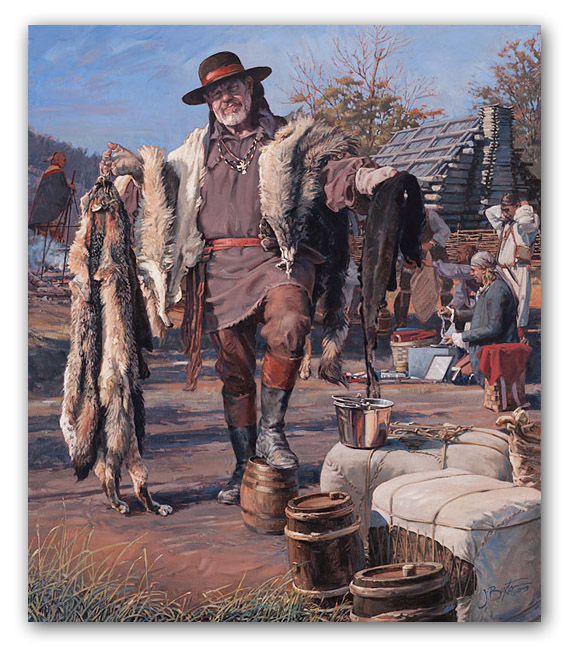
The Fur Trader
by John Buxton
In the 18th century, the Iroquois controlled the hunting grounds of western Pennsylvania where John Buxton lives. They rarely granted a commission for a white (or European) to hunt there. They had learned the value of animal pelts in trade and had become dependent upon it. In The Fur Trader, a buyer proudly displays his purchases on this day of trade. Deer hides (the white bundles in the foreground) provided leather and were the item traded for most in bulk. Specialty furs like beaver and fox would bring a higher price when he, in turn, brings them to market. All In the background, Indians examine the various goods that they will seek in trade for the pelts they have provided. Guns, powder, blankets, copper pots, mirrors where popular items. In due course, the Indians traded away much more than they bargained for. Native Americans were |
| Available in the following editions | Signed by the artist |
| Edition size: | 75 | Giclée on canvas | Image size: 21" x 18" | $395 |
 |
Receive your print fully framed and ready to display. Please call or email us for a custom framing quote. |